Su-City Pictures East, LLC

Screenplay & Film Consulting By Susan Kouguell

Category: 2025 New York Film Festival

Highlights from the 2025 New York Film Festival The Centerpiece Film: ‘Father Mother Sister Brother’ and the Closing Night Film ‘Is This Thing On?’

Family relationships dominate the Centerpiece and Closing Night Films.

My article for Script Magazine

Susan Kouguell
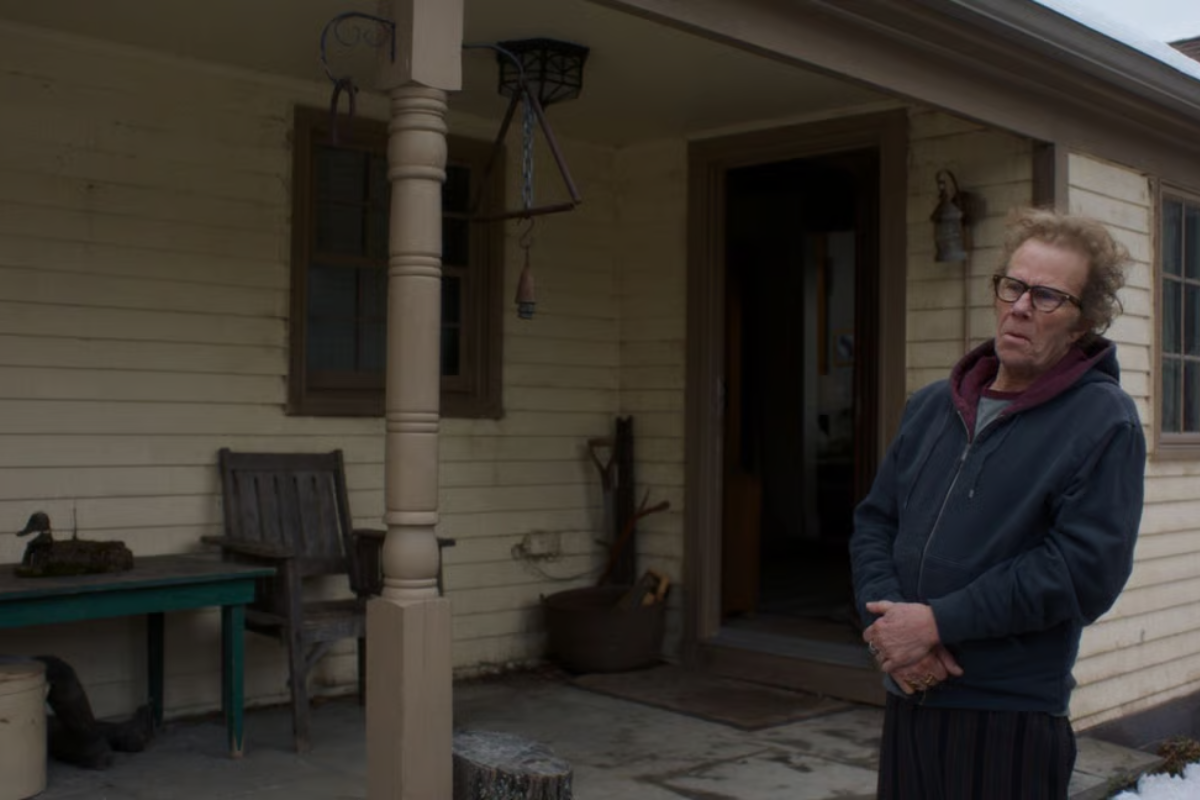
Father Mother Sister Brother (2025). Courtesy MUBI

Father Mother Sister Brother

Winner of the Venice Film Festival Golden Lion, writer and director Jim Jarmusch’s Father Mother Sister Brother is a study in familial dynamics constructed in the form of a triptych. The three chapters all concern the relationships between adult children reconnecting or coming to terms with aging or lost parents, which take place in the present, and each in a different country.

Siblings Jeff and Emily (Adam Driver and Mayim Bialik) check up on their hermetic father (Tom Waits) in rural New Jersey; sisters Lilith and Timothea (Vicky Krieps and Cate Blanchett) reunite with their guarded novelist mother (Charlotte Rampling) in Dublin; and twins Skye and Billy (Indya Moore and Luka Sabbat) return to their Paris apartment to address a family tragedy.

At the press conference, Jarmusch was asked if he had a particular way of thinking about each story when he was writing the script.

Jarmush: “I always have a kind of haphazard way of writing where I’m gathering small ideas that I don’t quite know the overall structure or picture yet. I write thinking of actors I would like to collaborate with on these characters. I thought it would be cool to make a film with Tom Waits as Adam Driver’s father and really that’s where it started. While writing that story, Mayim Bialik  was a host on Jeopardy and I’m a Jeopardy nerd and I hadn’t really seen her acting on TV. She’s a famous TV actor, right? But I just thought, ‘Oh, wow. That Jeopardy host kind of character could be close to the sister.’

I write really fast in like a month. But it’s hard. I can’t exactly tell you how it works because it’s really collecting disparate ideas that I don’t quite know the overall connect the dots picture yet. It’s always interesting to see how it gets connected from the writing to the filming.

I wasn’t really setting out with an intention. I didn’t want it to really say anything. I wanted it to observe people that are flawed without judging them. The thing about a balance between sadness and humor was important to me to sort of allow them both to exist in the film. But it’s an odd film because it’s very quiet and it doesn’t employ drama, violence, action, sex, you know, almost none of the things you expect. I was just interested in empathetic observation really and as far as families, they are very complicated.  I thought a lot about how parents are not upfront with their children for a number of reasons; either they want to be guides for them or they don’t want to reveal certain mistakes they’ve made or they want to be a kind of role model or there are a lot of reasons why they’re not really that maybe upfront about who they are.”
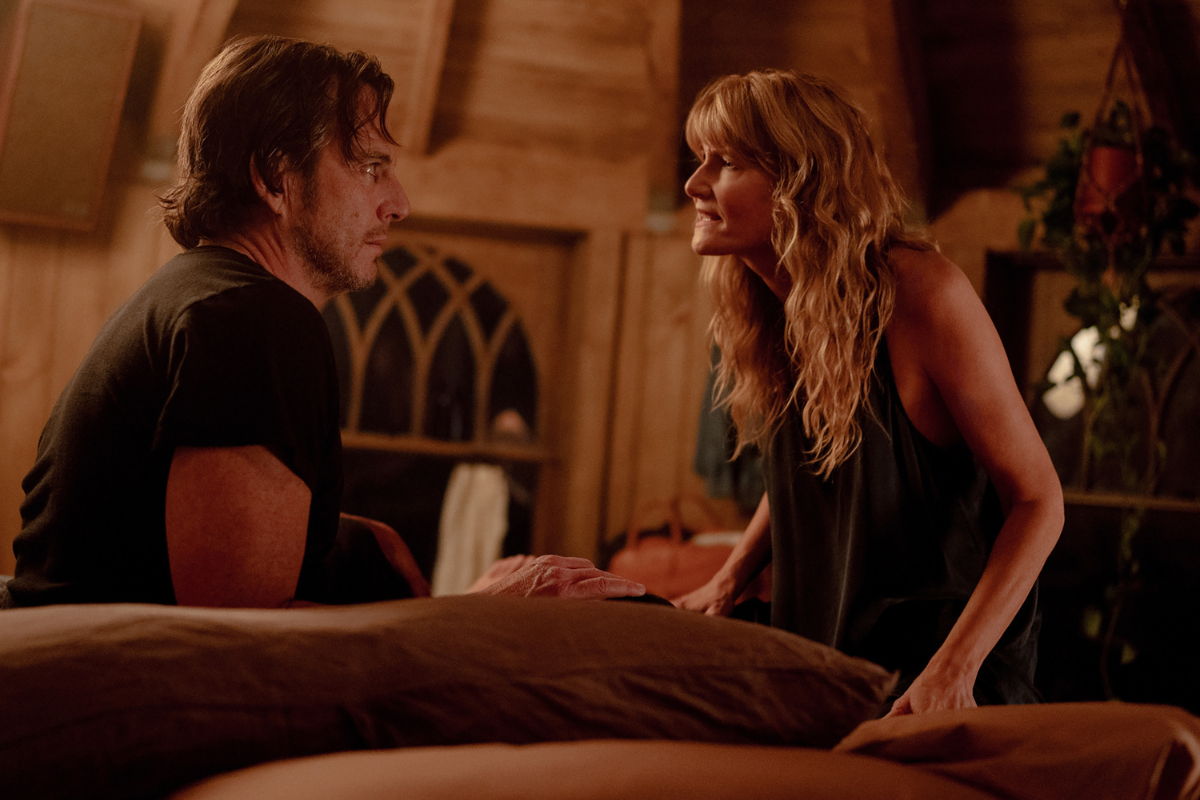
Is This Thing On? (2025). Courtesy of Searchlight Pictures

Is This Thing On?

Will Arnett and Laura Dern play Alex and Tess Novak, whose marriage has reached an impasse. With amicable sorrow, the couple—parents of two young boys—mutually agree to split up. Their separation leads to unpredictable midlife self-reckonings, most dramatically in Alex’s wild career pivot to become a confessional stand-up comedian in New York City’s West Village, where he finds new direction and camaraderie.

Written by Bradley Cooper, Will Arnett, and Mark Chappell Is This Thing On? was inspired by the true story of British comedian John Bishop.

The opening of the press conference centered on the evolution of the project.

Arnett met Bishop several years ago and was interested by his story of how he stumbled into stand-up comedy when his marriage fell apart. He convinced Bishop to let him and writing partner Mark Chappell take a stab at a film inspired by his story. Arnett brought an early draft of the script to Cooper who signed on to co-write and direct it. Cooper also has a supporting role in the film where he plays the friend of Arnett’s character.

Cooper was interested in exploring the idea of a guy being able to be honest with a room full of strangers – doing stand up – in a way he never was able to do before.

Arnett: “John Bishop’s story was a big inspiration. When Mark Chappell and I brought the script to Bradley, Bradley said I think this is where it could go and that’s how the collaboration started; he really gave us a lot of direction. Bradley ended up doing this rewrite that really shifted the film and took it to places we could only dream of.”

Cooper: “I was sitting at my daughter’s school in the East Village where we actually shot, and life will tell you what to do. We were sitting there and it was the Chinese New Year Festival and that exact group was there and I was looking at all these parents on their phones and I said that’s the beginning of the movie and I called Arnett.”

The decision not to include any scenes of Arnett’s character at his day job.

Cooper: “At least to me as a viewer if I’m watching something I’m always thinking of it in a derivative way like, oh yeah that’s like that movie or that’s that story. This movie is not about a guy who’s unhappy in his profession, he’s not miserable at work and he’s got to find another thing. I don’t want to meet his other co-workers. It’s not what the story is about. All I need to know is that he works in finance. He wears suits. He drops his kids off and goes to school. And it’s also based on people that I know. It’s not so much that they’re unhappy in their jobs. It’s that they’re not really uncomfortable with who they are. And it’s not necessarily just their job that’s telling them, it’s their life. That was the conscious choice. What (Arnett’s character) is going through it’s a bit like a catharsis not a crisis.”
2025 New York Film Festival Highlights: ‘Springsteen: Deliver Me from Nowhere,’ ‘Sentimental Value,’ ‘A Private Life’

Family Dramas Explored

Susan Kouguell

Published Script Magazine Oct 3, 2025 2:07 PM PDT

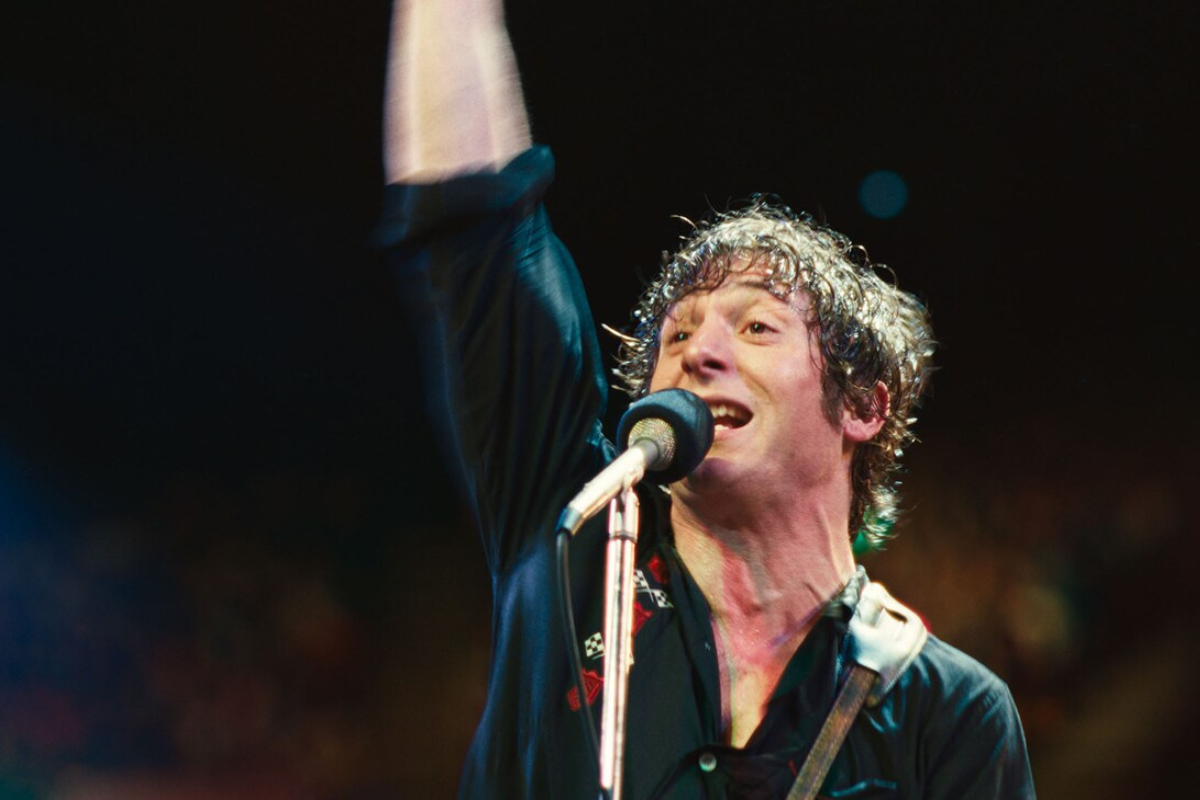
Springsteen: Deliver Me from Nowhere (2025). Courtesy of 20th Century Studios.

Springsteen: Deliver Me from Nowhere

Scott Cooper’s biographical drama Springsteen: Deliver Me from Nowhere, adapted from Warren Zanes’s 2023 best-selling chronicle of the same title, is set at an early-’80s crossroads in Springsteen’s career when, still negotiating the transformative waves of his rising fame, he crafted the personal acoustic songs that would become his mythic album “Nebraska”—at the same time that he was recording the demos for “Born in the U.S.A.” which would catapult him to global superstardom.

The Q&A with actor Jeremy Allen White and writer and director Scott Cooper, offered insights into the making of the film, including that Springsteen was on set the majority of the time, flying back and forth while touring, and that White had extensive voice, guitar, harmonica, and movement coaching. They described the overarching themes of the film as memory and myth and regret.

Cooper: “Author Warren Zaynes said that he wrote the book because in Bruce’s memoir most chapters were quite lengthy, but the chapter on “Nebraska” was very short. I think it was like a page and a half. So Warren thought, ‘My god, that’s the story I want to know. That’s the story I want to tell.’  I met with Warren and we both knew of course that Bruce was reluctant. He’s always said no to any type of film about his life that isn’t a documentary. Warren and I sat down with Bruce and Jon Landau at Bruce’s house. I told Bruce that I didn’t particularly see the merits of a of a traditional biopic for Bruce, so I said, ‘Bruce, I feel like there’s a real story here that’s a psychological drama, about the art of creation, and I think it can really give voice to particularly men who often don’t give voice to their pain, don’t know how to get the help they need, don’t understand what it is that they’re suffering through. And of course, I never wanted this in any way to be a message movie.’”

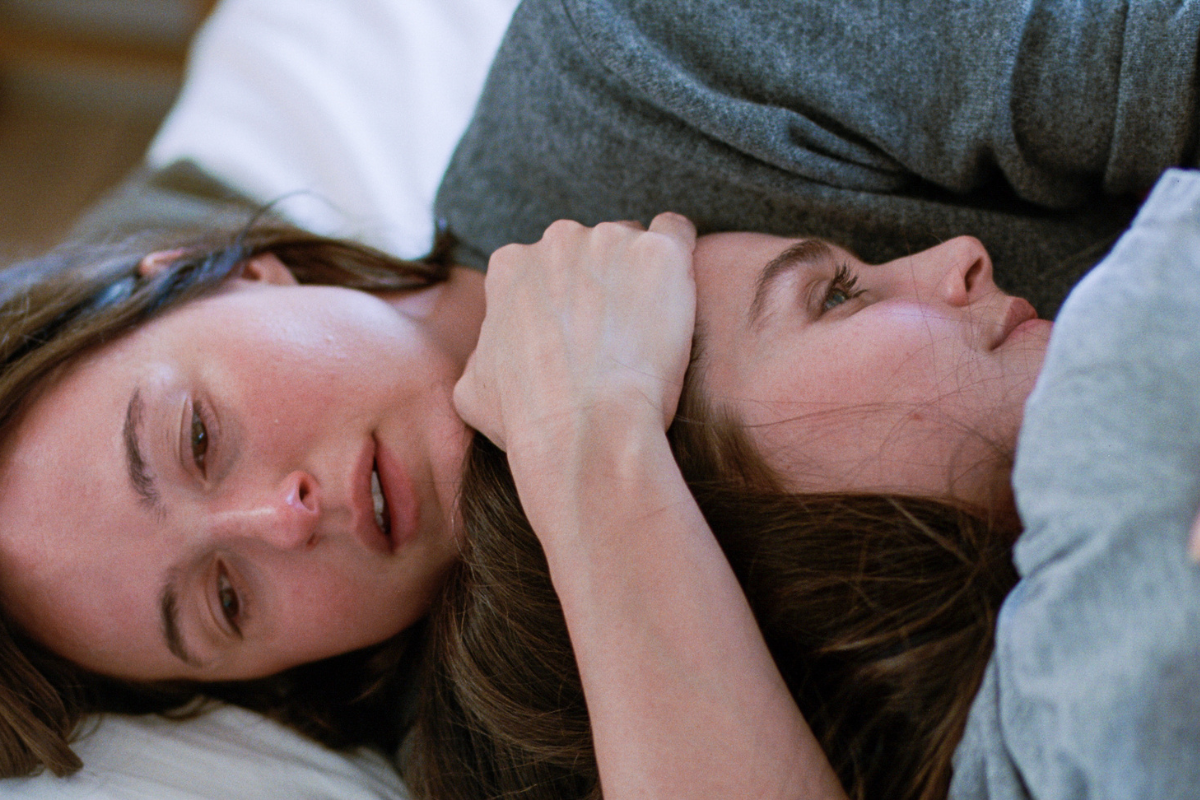
Sentimental Value (2025). Courtesy of MK2 Films/Neon.

Sentimental Value

Winner of the Grand Prix at the 2025 Cannes Film Festival, Swedish writer and director Joachim Trier’s Sentimental Value centers on two sisters who must confront their relationship with their estranged father when he reappears after their mother’s death. 

At the New York premiere of his film, Trier discussed his poignant family drama: “I’m now pondering, what is the provocative counter position to a world where everything is very aggressive and divided? And I thought that maybe now tenderness is the new punk, that we actually need to listen to each other. I made a film about reconciliation, you know, and a family. But I think about that in a bigger way as something we need to think about—listen to each other and not make the other the enemy.”

Setting the film at the childhood home of the main characters offers a particular emotional layer of the story. Secrets, generational trauma, and more are explored as they navigate their respective past and current relationships and the future of the pending sale of the house.

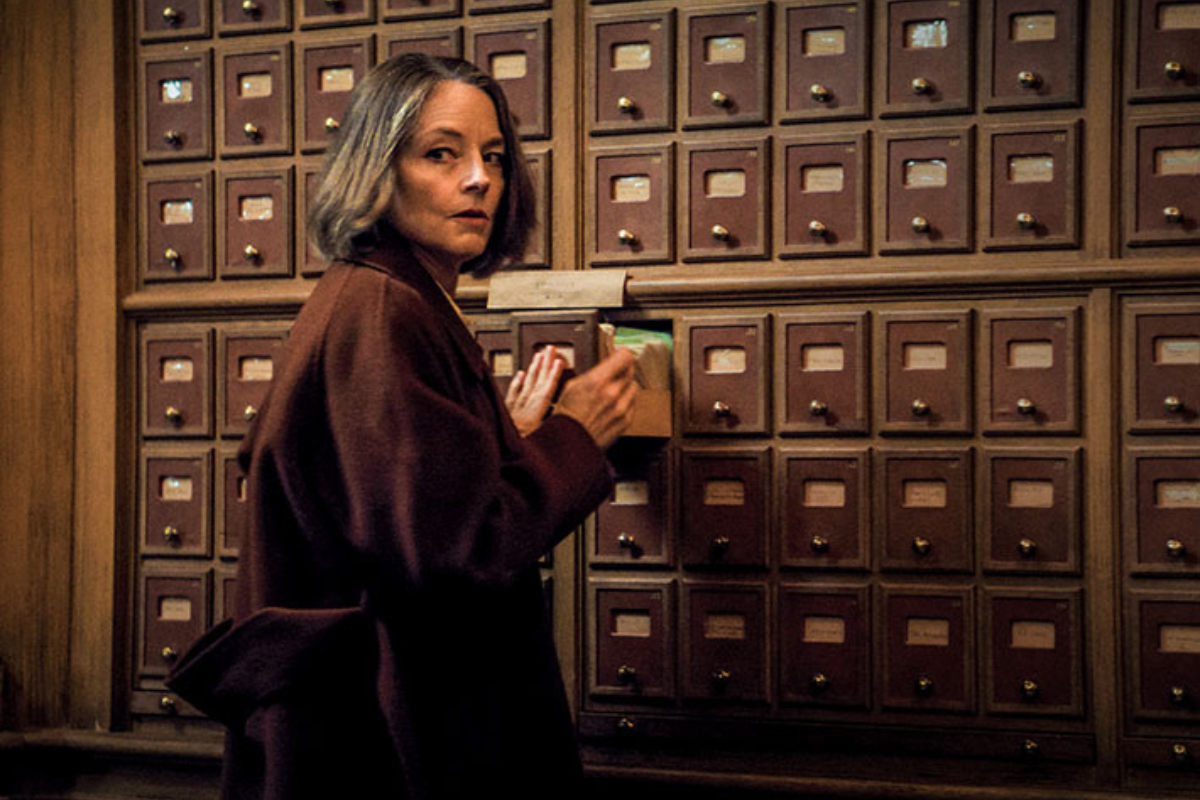
A Private Life (2025). Courtesy of Sony Pictures Classics.

A Private Life

Director Rebecca Zlotowski’s unpredictable and sometimes zany murder mystery stars Jodie Foster in her first French-language performance as an American psychoanalyst in Paris whose tightly knit world begins to unravel after the sudden and suspicious death of a patient. Co-written by Zlotowski, Anne Berest and Gaëlle Macé.

A series of twists lead not only to past grievances but past lives. (And even a cameo by the renowned documentary filmmaker Friederick Wiseman whom I interviewed for this publication.) The tonal shifts might be unsettling for some viewers as it moves back and forth from a drama about families, a comedy of remarriage, and a whodunit. Perhaps the true mystery of the story is revealed by the question (no, this is not a spoiler alert): “Why did you leave me?” 

Highlights from the 2025 New York Film Festival: ‘After the Hunt’ and ‘Anemone’

Behind the Scenes Writing of ‘After the Hunt’ and ‘Anemone’

Susan Kouguell

Published Script Magazine Oct 1, 2025 9:30 AM PDT

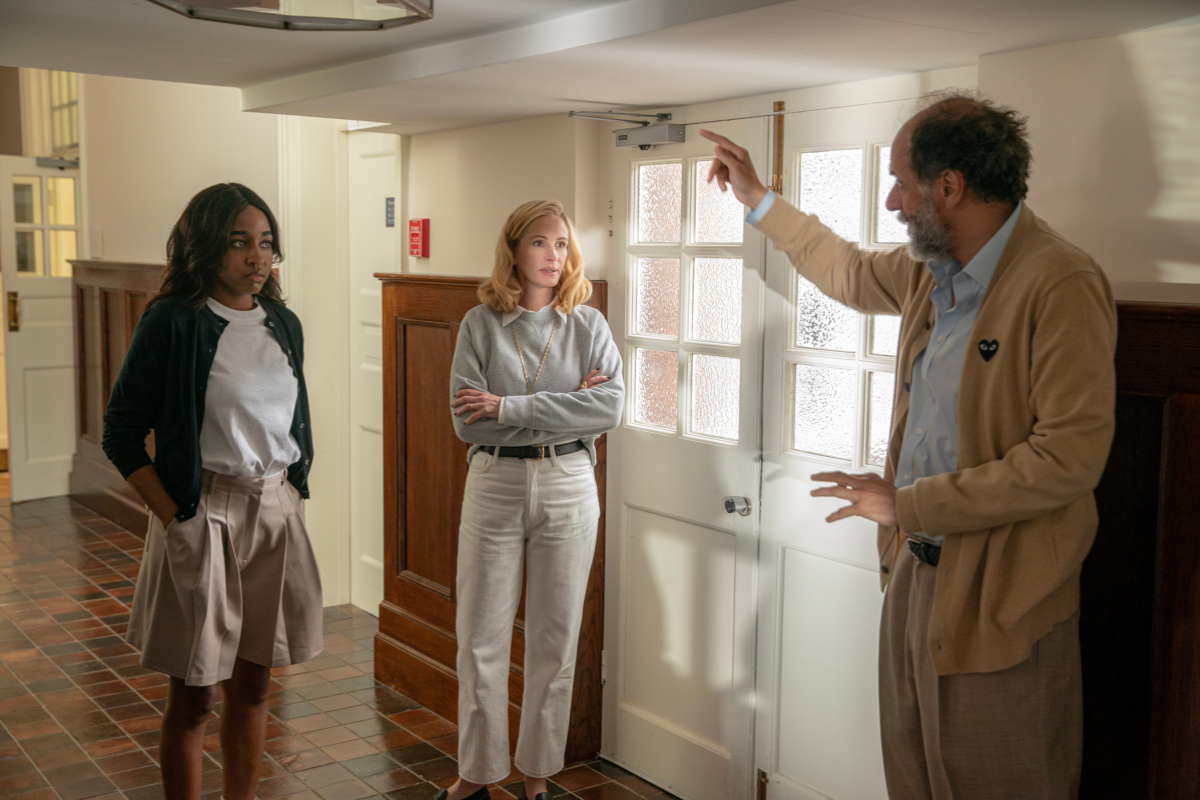
[L-R] Actors Ayo Edebiri, Julia Roberts and director Luca Guadagnino on the set of AFTER THE HUNT, from Amazon MGM Studios. Photo Credit: Yannis Drakoulidis

After the Hunt

The opening night film of the 63rd annual New York Film Festival, After the Hunt, centers on a philosophy professor (Julia Roberts) whose life is thrown into chaos after her protégée (Ayo Edebiri) accuses her longtime colleague and friend (Andrew Garfield) of sexual assault.

In attendance at the press conference cast members Julia Roberts, Andrew Garfield, Eyo Edebiri, and Michael Stuhlbarg discussed their flawed and often unsympathetic characters, navigating a world of academia, power plays, and relationships.

“Am I a provocateur? No, I don’t think so. Do I like to make the audience feel what they’re seeing? Yes, I do very much.” – Luca Guadagnino, director

Indeed, After the Hunt is a thought-provoking film with layered characters who make unsympathetic choices and hide their truths. 

Director Luca Guadagnino and writer Nora Garrett discuss the script

Garrett: “My first construction going into writing was not thinking about how many potential buttons to push simultaneously. The genesis of the screenplay really started with the character of Alma, played by Julia Roberts. And I was really interested in her internal struggle; this idea of becoming a very outwardly successful person, becoming someone who was looking for power chasing power, but had this sort of internal compartmentalization based on a certain amount of shame from childhood or from a place when you had a certain amount of plausible deniability about the person you were and the person you would become. So the story kind of grew around that.”

Guadagnino discussed how they worked together on the project. “One of the great pleasures of my life is to work with writers that are brilliant like Nora, and this was quite a brisk process. I read the script, we met, we said, ‘Let’s do it.’ I think when you get a script that is so good and so strong, the duty is to make sure that embodiment is reflected in the script, because we had the privilege of working discussions. We wanted to make sure that every character could become the perfect character for each way, and to get their input into each as well.”

Setting the story at Yale

Garrett: “I did set it at Yale. Truthfully, I was writing this on spec without an agent or a manager. So I kind of thought that would never pass any legal process were this to get made. I am a very visual writer. I had been to Yale’s campus a couple of times. I have family members who went to Yale. But something that really interested me about Yale as an institution is that it’s in New Haven. And so it’s sort of this castle on a hill in an area that doesn’t have the same access to the affluence and power that Yale holds within its walls. There is this very clear stark difference between a powerful institution that comes from a lot of old money and a city that has a lot of economic turmoil surrounding it.”

Guadagnino: “I like to deal with archetypes and to deal with the great American landscape and of course the Ivy League world is so important to America, but also to us as Europeans. It reflects on us a lot. So the idea of telling a story that happened at Yale gives a sense of universality to it and an infrastructure that is so cinematic and as you (Nora) said the idea that Yale is a world within a world of New Haven. You see the different layers of this society clashing. We really shot this in London completely.”

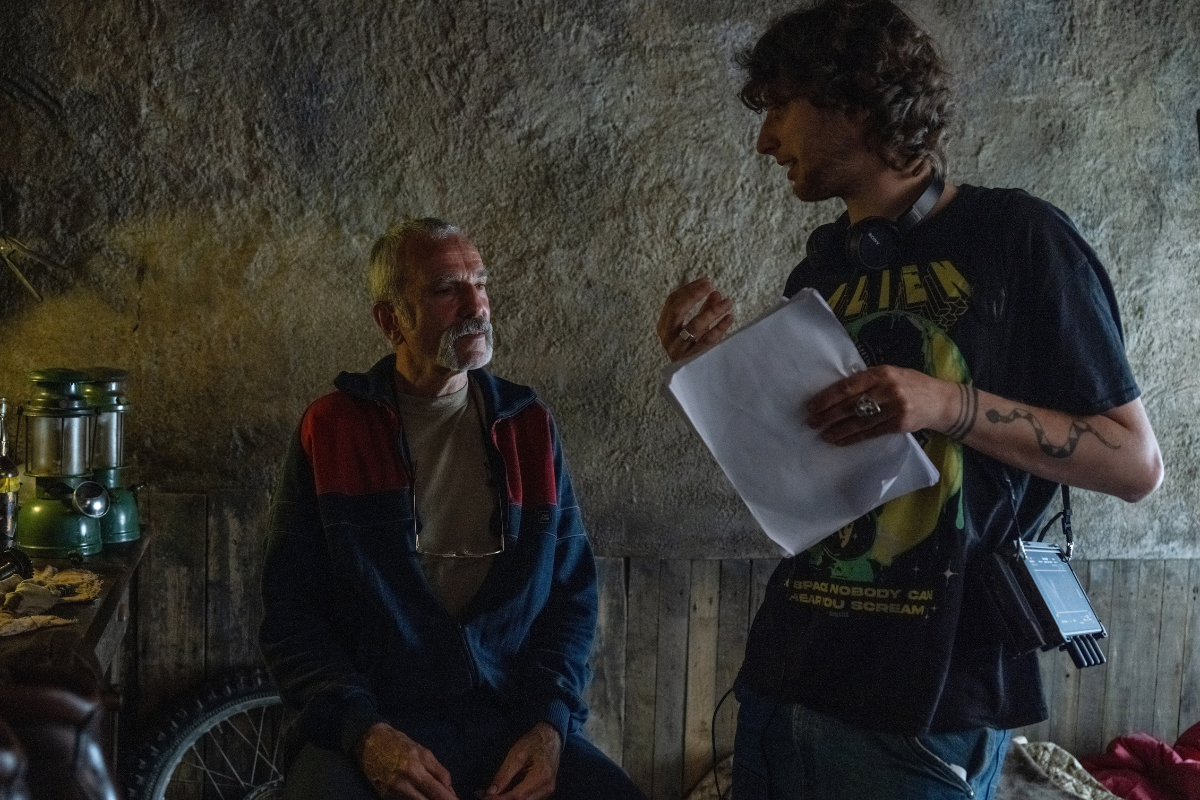
[L-R] Actor Daniel Day-Lewis and director Ronan Day-Lewis on the set of ANEMONE, a Focus Features release. Credit: Maria Lax / Focus Features

Anemone

An emotionally charged family drama – directed by first-time feature director Ronan Day-Lewis and co-written with his three-time Oscar-winning father actor Daniel Day-Lewis – Anemone centers on lives undone by seemingly irreconcilable legacies of political and personal violence on a path toward familial redemption.

At the press conference, Ronan Day-Lewis, Daniel Day-Lewis and actor Sean Bean discussed the writing process, the archetypes of brotherhood, and the use of silence in the film.

Ronan Day-Lewis:  “I have two brothers and I think that there’s this sort of beauty and tragedy to brotherhood; that kind of volatility where things can go from love and volatility in a matter of seconds. I was really fascinated with and we (gesturing to his father) were really interested in the sense of silence and just how siblings can have this almost telepathic communication with each other and how many different silences can exist between brothers, between siblings.”

The writing process

Ronan Day-Lewis: “We started kind of intuitively. We didn’t start with an outline or anything; it was very different from past scripts that I’ve worked on. It was almost like walking into the dark with a flashlight. We had the sense of there being this man who’s living in a state of self-exile and living in this remote environment and his brother turning up after 20 years of no contact. But beyond that, we didn’t really know the circumstances of their pasts and their lives. Their connection started to reveal themselves over time.

There was a lot of improvisation that went into it where my dad would actually speak as the characters and especially Ray. I sort of felt him kind of slipping into that character really early on in the process which was remarkable.”

Discussing why the script took several years to write Daniel Day-Lewis stated: “It took a long time because we only ever wrote when we were in the same room together. So we never tried to do it remotely at any point. Things would occur to us independently and then we would chat on the phone and come together but Ronan’s schedule was pretty busy after college so we just decided that was the way we wanted to do it and I think it worked best for us.”

Ronan Day-Lewis and Daniel Day-Lewis agreed that having that time to reflect and develop the characters in this way also allowed the opportunity to have a shorthand on set and in the monologues, dialogue and silences.