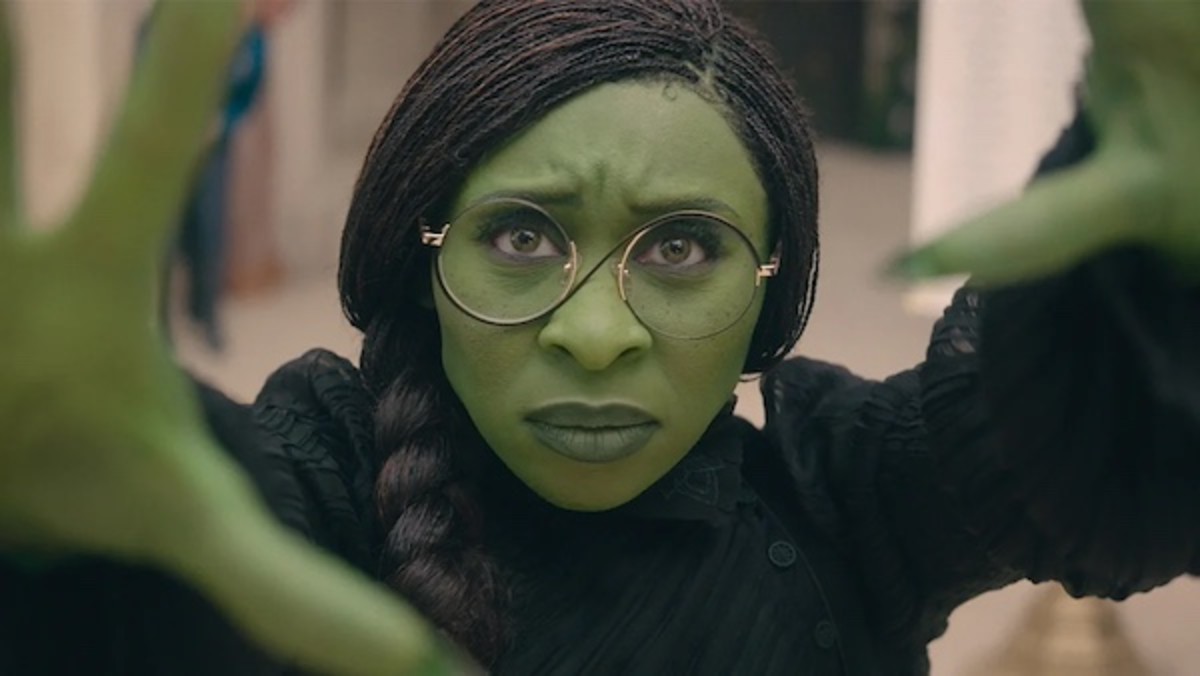
In this wide-ranging interview, Dana Fox discusses collaboration, the challenges and joys of adapting from source material, and creating emotional authenticity and thematic depth.
By Susan Kouguell for Script Magazine
It was a great pleasure to speak with Dana Fox about the global box office phenomenons Wicked and Wicked: For Good. In our wide-ranging interview we discussed collaboration, the challenges and joys of adapting from source material, and creating emotional authenticity and thematic depth.
Acclaimed writer, producer, and showrunner Dana Fox was nominated for a Critics Choice Award® and a WGA® nomination for Best Adapted Screenplay along with Winnie Holzman. Fox’s feature work includes co-writing The Lost City, Disney’s Cruella, How to Be Single, Couples Retreat and What Happens in Vegas. In television, Fox is an executive producer for the new adaptation of Little House on the Prairie, and she was the co-creator, showrunner, and executive producer of Apple TV+’s Home Before Dark.
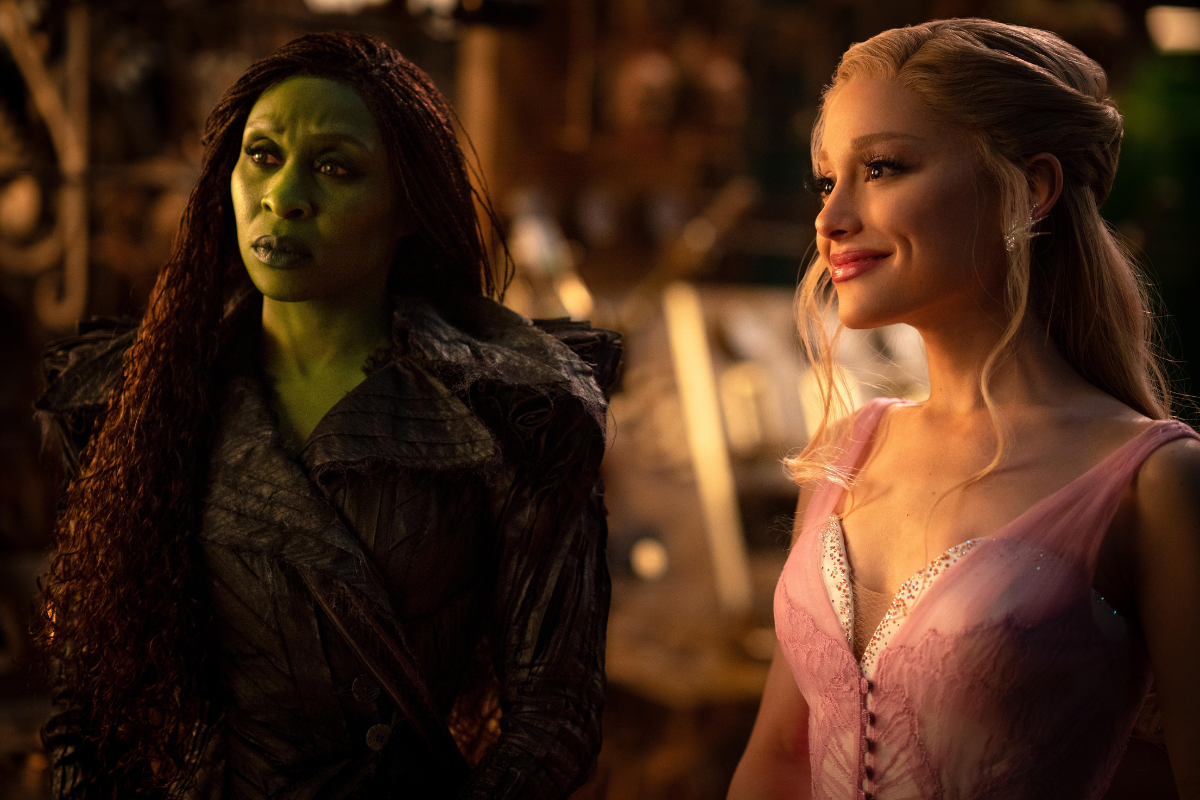
Kouguell: Last year, in two separate interviews, I spoke with writer Winnie Holzman and editor Myron Kerstein about their work on Wicked for this publication. They were an absolute treat.
Fox: Winnie and Myron are two of the best. Myron is one of my old dear friends; we have done a few things together. He is so brilliant. I have learned more about writing from watching him edit. He follows emotion stronger than anything else and how those pieces can be used to tell an emotional story.
Winnie is so smart and wonderful. We’re very complementary to each other. I have a very structured brain; I think in movie trailers, film poster form, and then movie form. My brain is always thinking, what are going to be the big trailer moments, [laughs] which is a very strange thing to do. And Winnie loves to dig deep into characters. I’m always thinking about structure because I think of structure as character; structure is a character’s journey, and it’s where that person is along their journey. And are we hitting those moments in the places that the audience wants to experience that feeling? Also, Winnie is just so beautiful at themes. She’s so careful with words and understands the power of an individual word.
Kouguell: How did you come onto the project?
Fox: I was brought on by Jon M. Chu because he and I had worked together before and we really enjoyed the process. I had said to him, ‘I will do anything for you from now until the end of time’. He is constantly striving for excellence. He’s very collaborative, but he really knows what he wants, and I respect and love that. And so he called me and said he had another project and this one was Wicked. My secret was that I had never seen Wicked in the theatre. It was the middle of the pandemic, so Broadway was closed, so I couldn’t rush out and see it.
Winnie and Stephen [Schwartz] were generous enough to give me the script of the play, which I read probably 25 times while listening to the music. Jon said we’re gonna be working with Winnie and Stephen to break the stories for both movies, and then you and Winnie are writing them. It was a dream come true.
I had been a fan of Winnie’s for my whole life because I was obsessed with My So-Called Life. I dressed like Claire Danes for all of high school because I thought it was the coolest thing in the entire world. So to get a chance to work with a writer whom I love and respect so much and then to even be in the room with Stephen Schwartz who’s an absolute legend, was incredible.
Kouguell: Tell me about your collaborative process.
Fox: I couldn’t believe my luck to be with Stephen Schwartz and Winnie Holzman, talking about one of the most famous plays of our time, along with Jon M Chu. Winnie, Stephen, Jon and I basically sat on Zooms for about 150 hours before we ever even started writing. That was the period where we interrogated the plays.
Kouguell: What were some of the challenges you faced adapting the source material to the screen?
Fox: We knew that we had this source material that was so beloved and that we had to be very careful with how we adapted it, and yet we knew that everything had to be different to give it a reason for existing. The questions were: how do you make it different? How do you add the things that are not gratuitous but deepens the core DNA of this that people love so much.
We also talked about what are the inherent problems in splitting it up as two movies, and how do we approach it.
It was a very delicate dance we were doing with the source material of both the play and The Wizard of Oz film as well. We wanted to be so careful because that movie was all of our favorite movie. We knew we couldn’t hurt anyone’s memory of the Wizard of Oz either.
Kouguell: In Wicked: For Good there was a nod to the original movie. For example, seeing Dorothy’s dress from a distance I thought that was such a smart choice.
Fox: It was very controversial, apparently. People thought that was a wild choice, but to me, it was the point of the project; which was, isn’t it funny and wonderful that the story that you’ve known your whole life, you’re now realizing that every main character has their own story. And so to me, you have to not show her. You have to have her be on the sidelines otherwise you’re violating the principle of what the brilliant idea of Gregory Maguire was in making this project: The story you thought you knew isn’t necessarily exactly what you thought it was.
Kouguell: And then everyone can impose their own story onto those characters.
Fox: Exactly. And we really wanted people to feel like they could engage with the movies and that the movies were theirs even though it was a very rare experience to be able to make two movies at the same time.
Kouguell: Tell me about your collaboration process with Winnie.
Fox: Winnie and I sort of invented our own version of collaboration, and we changed it throughout the process based on what the movie needed from us at any given moment. We broke both stories at the same time. We did focus on the first one first, and then we moved into the second one. But that only existed on cards, sort of like index cards but on Zoom like computer index cards that gave us the broad strokes of what each movie was going to be.
It was interesting because once we finished carding the second movie, there were a lot of moments where we thought actually, we got to go pop back into movie one and tweak this because we’re setting up that. It was the most amazing gift and puzzle.
Once we had the cards, then we outlined the first movie together, and we started writing the first movie. And, basically, Winnie and I did any version of collaboration that made sense to us.
Either she was writing a scene and I was writing a scene, and then we put them together, interweaving the scenes. Or she would do a chunk and I would do a chunk. We would swap chunks, rewrite each other’s chunks, and then stick them together.
When the first movie was done, Winnie started doing notes for Jon and the producers and that group, and they kept working on movie one. I pivoted over and did the outline for movie two and then started beating out a blueprint version of movie two so that as soon as Winnie was done with those notes, she could come over into movie two. The collaboration just kept evolving with wherever we were in the process.
It was also really fun because I was on the East Coast, and Winnie was on the West Coast. She is a night owl and I’m a morning person. So weirdly, there was a lot of passing back and forth where, somehow we got twenty hours out of every day because of the fact that we were in different time zones. So there was always an elf working on the movies at all times.
Kouguell: The two films felt that each could exist on its own.
Fox: That was a big thing we were trying to do. You have to be able to see them if you’ve never seen the play and still like them. You have to be able to see them if you’ve never seen the Wizard of Oz and still like them. That was the hardest thing to solve for movie two, which is – can you enjoy movie two without ever having seen either the play or movie one?
We were also dealing with the audience’s expectations that came from having watched the first movie. And the tone of the two movies is very different. It’s almost like asking the audience to go from Harry Potter 1 to Harry Potter 5 within just a year.
Kouguell: You mentioned that the tonal shift in Wicked: For Good was a deliberate choice.
Fox: What was so interesting about exploring this particular movie was that Glinda makes bad choices. She doesn’t stand up for what’s right when she should. I really wanted to make her more complicit in that. I didn’t want it to just be like, oops I’m Glenda I forgot to do the right thing because I was focused on doing my makeup over here. I wanted to be like, no, you had chances to do the right thing.
Part of that complicity to me makes it more OK that Elphaba and Fiyero run off together because you chose this. And your choices made you a person that has to live with that, and face it, and you could have stopped it, and you didn’t.
Kouguell: Indeed. Yes, complicity and silence.
Fox: I have studied the time period at the beginning of World War II. I’m so interested in the psychology of when did people know, what did they know, what choices did they make, and how did they rationalize those choices to themselves to not do anything.
Kouguell: Glinda’s complicity and moral struggles can be viewed in a broader historical context and parallels to the past and present.
Fox: That’s why the tone had to be what it was. We did not know that this was the moment we were going to be in when we were writing this movie. We wrote it five years ago so this isn’t about what’s happening right now. This isn’t about a specific person, of course, because it couldn’t be. But what I find upsetting about it is that the reason this feels so timely is because persecution of people by other people who want power is timeless.
It happens over and over again. When Gregory Maguire was writing the book, there was a version of it that was happening. When Winnie and Stephen were writing the play, it was in the shadow of 9/11, and a certain group of people were being persecuted because of fear.
I felt strongly that I wanted to see Glinda’s complicity more because that’s a big part of the emotional arc of her actually changing at the end. Winnie and I talk about this all the time. We want people to interpret it however they want to interpret it. And Winnie and I even have slightly different views of why the Grimmerie opens.
In my opinion, the Grimmerie opens up to her because when Elphaba hands it to her, she says, you know I can’t read that thing. It’s the most painful thing she could admit and it’s so dark for her because it showed her childhood. What Glinda wants is to be magical, and she is not. And so for her to admit her core wound in front of her best friend, that to me is why she earns the Grimmerie opening to her. The Grimmerie isn’t saying, now you’re magic. It is saying, now you get to start the work; this is just the beginning of the work. I love that message because it’s saying we can still do the right thing; it’s never too late to do the right thing. Glinda does it so late and yet it does make a difference.
Wicked: For Good is now in Theaters.
![[L-R] Cynthia Erivo as Elphaba and Ariana Grande as Glinda in Wicked (2024).](https://scriptmag.com/.image/t_share/MjEwOTk5Njc4Njg5MzU1MzEx/wicked-universal.jpg)
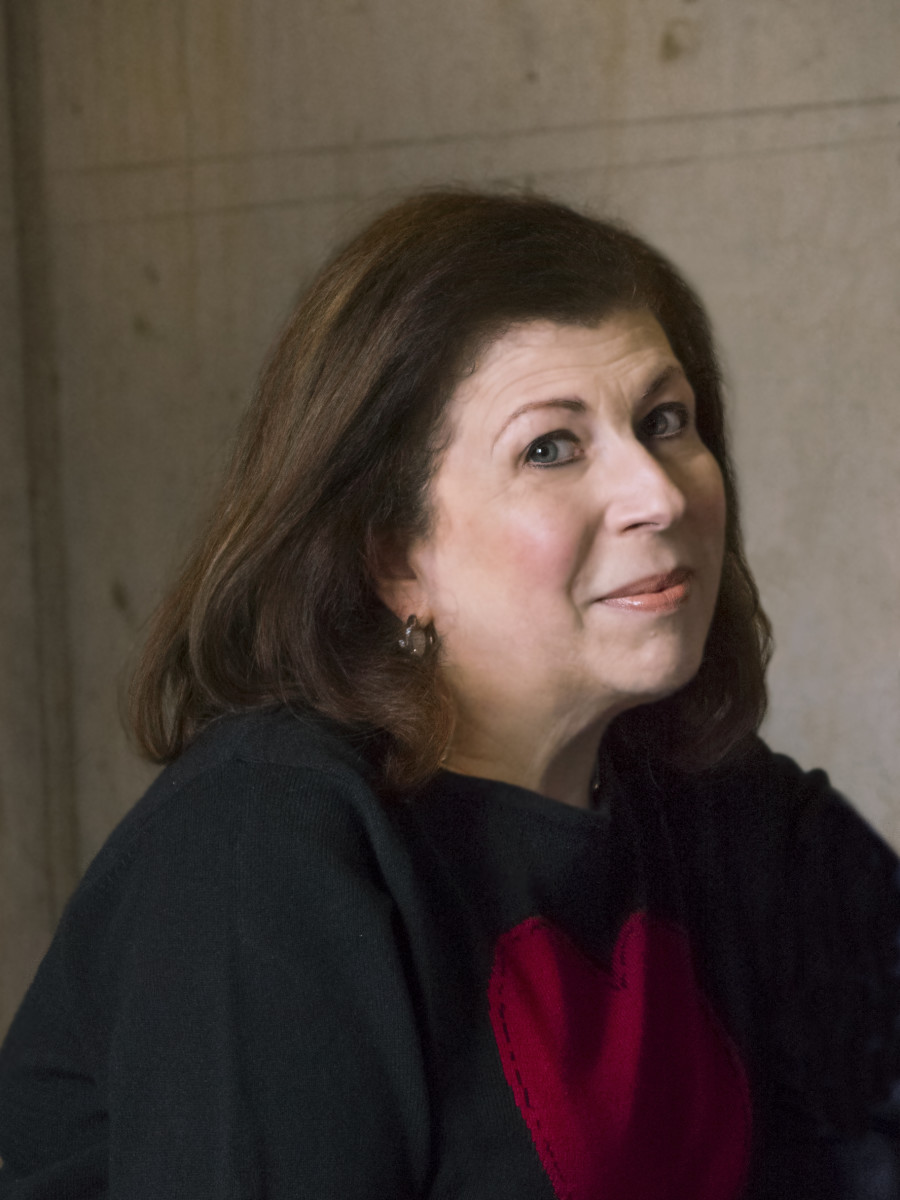
![[L-R] Cynthia Erivo as Elphaba and Ariana Grande as Glinda in Wicked (2024).](https://scriptmag.com/.image/ar_16:9%2Cc_fill%2Ccs_srgb%2Cfl_progressive%2Cg_faces:center%2Cq_auto:good%2Cw_640/MjEwOTc4Mzg3NDYyNzI3NjU3/241110-wicked-movie-doll-wm-417p-f678f6.jpg)